SUP500- NO LAND NO LIMITS


Autumn 2026
SUP500: 192 km of wild water and hard lessons
192 km. 36 hours and 30 minutes. One very sore shoulder. And a coastline I love even more than when I set off.
SUP500 began at 9 am at Meadfoot. The aim was to paddle 500 km without setting foot on land, carrying everything I needed on the board. Food, clothing, safety kit and somewhere to sleep were all coming with me. I knew the challenge would be physical. I also knew the real work would be reading the coast and making good decisions as conditions changed.
Day one: Meadfoot to North Hallsands
48 km | 11 hours 30 minutes | Average speed: 4.17 km/h
I felt fresh leaving Meadfoot. For much of the day, the wind was confused but the tide was travelling in my direction. I was looking for the fastest water, watching how it moved around each point and headland, and choosing a line that let the flow do some of the work.
The wildlife was magnificent. I saw seals and porpoises, then watched a tuna leap out of the water near Start Point. You can spend years on this coast and it will still find a way to surprise you.
Start Point was bumpy. East Prawle was fierce. Wind and tide were against me and the water around the corner was confused and powerful. I made four attempts to round it. Four times, the answer was the same. I wasn’t getting through safely with a board carrying that much kit.
So the route changed. I headed back into Start Bay to make distance where I could, planning to try East Prawle again the next day. I reached North Hallsands in the dark and grabbed a quick rest. The seals seemed determined to keep me company, whether I wanted them to or not.
Through the night: North Hallsands to Dartmouth and back, twice
67.47 km | 10 hours 30 minutes | Average speed: 6.43 km/h
The wind eased and the tide settled. Under a clear, moonlit sky, I paddled from North Hallsands towards the Dart estuary, almost to Kingswear, then turned and did it again. Demoralising paddling but getting the Km's at a much faster pace without any wind of tidal flow.
Parts of that night blur together now. I remember the moonlight on the water, the activity beneath and around the board and the strange feeling of being completely tired yet utterly absorbed in where I was. It is one of the reasons I love long coastal paddles. In the dark, you pay attention to everything.
Most stops were brief: reach for food, eat and keep moving. Tins of tuna were brilliant for a quick hit of protein. Pancakes and peanut butter were easy to grab and eat on the board. Nothing fancy, just fuel that works for me.
I also kept changing how I paddled to give different parts of my body a break. I have six strokes I rotate through: wrists only, arms only, shoulders only, core only, legs only and full body. Over a long distance, those changes matter. When one set of muscles starts to complain, I can shift the work elsewhere for a while.

The route changes again: North Hallsands to Brixham Breakwater
25.78 km | 7 hours 45 minutes | Average speed: 3.33 km/h
At first light, the plan was still to head back to East Prawle and continue towards Salcombe. But southerly winds of 10–15 mph were forecast. Paddling into that wind, around that headland, on a loaded board was not the right call. I turned towards Torbay, intending to use the shelter of the coast around Babbacombe as the south to south-westerly wind increased.
This was a slow, demanding stretch. The spring tide created back eddies, while wind against tide made some sections impossible to smooth out, however carefully I chose my line. I was constantly reading the surface: where the current was moving, where it was folding back on itself and where I might gain a little speed without straying into rougher water.
The sunshine was part of the picture too. It was a warm September day and I could watch local winds developing as the land heated up. The forecast gave me a broad idea but the water and the sky were showing me what was happening right there, minute by minute.
The final push: Brixham Breakwater to Babbacombe
50.75 km | 6 hours 45 minutes | Average speed: 7.52 km/h
By the afternoon, the sea had become chaotic. A gust at my back could send me flying, sometimes with a bit of surfing. The next moment I was working hard to keep the board upright and tracking straight.
That board was a LIVE Water Sports board, and it did its job in demanding conditions. It was carrying around 60 kg of kit, with me at about 95 kg and the board itself at roughly 35 kg. I have ideas for how it could work even better on an adventure like this and I’ll be talking with LIVE about making it lighter, shallower and incorporating hatches into the board.

Rounding Hope’s Nose and heading towards Anstey’s Cove gave me another sight I won’t forget: a tightrope walker crossing high above the cove. Then, at Oddicombe, there was a disco on the beach. After so many hours with the sound of wind and water, the music was a welcome lift.
In the shelter of the headland, I paddled from Oddicombe to the Teignmouth estuary and back twice, this was painful in its repartition but didn't tax the decision making and awareness. I set out a third time but by Labrador Bay my right shoulder was in real trouble. Every stroke hurt, grinding in the movement. I turned around.
My Blackfish paddles were outstanding throughout. The force going through a paddle shaft when you are turning and driving a heavy, loaded board through rough water is enormous. I trust those paddles in extreme conditions, and they never gave me a reason to doubt them.
Back at Oddicombe, I tried to change and get some sleep on the board. That was when I understood how much my shoulder had gone. I couldn’t get down to my kit properly, couldn’t manoeuvre to even take my wet clothes off and couldn’t reach what I needed to cook. The temperature was falling. Staying out there wet, unable to get warm or look after myself, was no longer a safe option.
I limp paddled to Babbacombe slipway under the moonlight and stepped ashore. SUP500 ended at 192 km, with an overall average speed of 5.26 km/h.
The kit that came with me
When you carry everything and spend day and night on the water, comfort and access to kit make a huge difference.
My Sealskinz day kit was superb. The shorts, fleece and light jacket were so comfortable I barely noticed I was wearing them. They dried quickly, while the waterproof gear did exactly what I needed it to do. I already rate their socks and gloves highly, and the rest of the kit earned its place on this paddle too.


At night, I added Yak Outdoor Equipment’s cag and trousers for a tougher outer shell. They gave me confidence through the colder hours, while Yak’s dry bags kept my clothing and electrical kit protected and easy to reach while moving.


I had very little sleep, but for those short rests, and for paddling through the early hours when the September dew came down, my Osprey change robe was wonderful. A warm, shaggy lining, a proper outer shell and a big hood can do a lot for morale at that time of night.


Thank you, too, to Hampton by Hilton Torquay, Vertu Land Rover Exeter and Shoretees Boardwear for backing the adventure.
What 192 km taught me
I went too hard in the first 24 hours. When the conditions became tough, I kept thinking about the distance I needed to cover. At times, resting would have been the better decision.
I also learnt to give more weight to what I could see happening around me. My experience was telling me how the weather and water were developing, even when the forecast suggested something different. Reading tidal flow, wind, clouds and sunshine was central to this paddle, but I could have trusted those observations more when deciding where to go next.
Another moment changed the route completely: I knocked my VHF radio off the board into the sea and it stopped working. From then on, I stayed close to the coast. Returning towards Torbay made sense because I knew I could get a reliable phone signal there. Heading onwards past Salcombe, where I know reception can be patchy, would have been irresponsible without a working radio.

I didn’t make 500 km. I did have a blast. I learnt more about the behaviour of seals, saw a tuna jump and found out more about my own endurance. I spent 36 and a half hours watching how a spring tide moves around some of the toughest headlands in the UK.
The sea is one of my happiest places. I love the adventure, the wildlife, the people you meet and those moments when everything clicks and the board seems to fly. I respect it enough to change course when a headland says no and to come ashore when my body can no longer keep me safe.
The reason I started
I set out on SUP500 to raise enough money for Above Water to visit 10 areas of the UK and deliver water safety training. The paddle has ended, but that ambition has not.
If following this adventure has inspired you in any way, made you think about an adventure of your own or prompted you to think about water safety the next time you visit the sea, could you make a donation? Even that £1.50 down the back of the sofa would help.
If we reach £1,500, we can deliver three hub training sessions. That would be so, so awesome.
Donate to SUP500 and support Above Water’s training
Thank you to everyone who followed, sent a message, supported the challenge or shared a moment with me on the water. You helped carry me through those 192 km.
or DONATE directly to the charity
Behind the scenes, multiple factors to planning SUP500

Enter SUPTwelve
Gift SUP Experiences
-
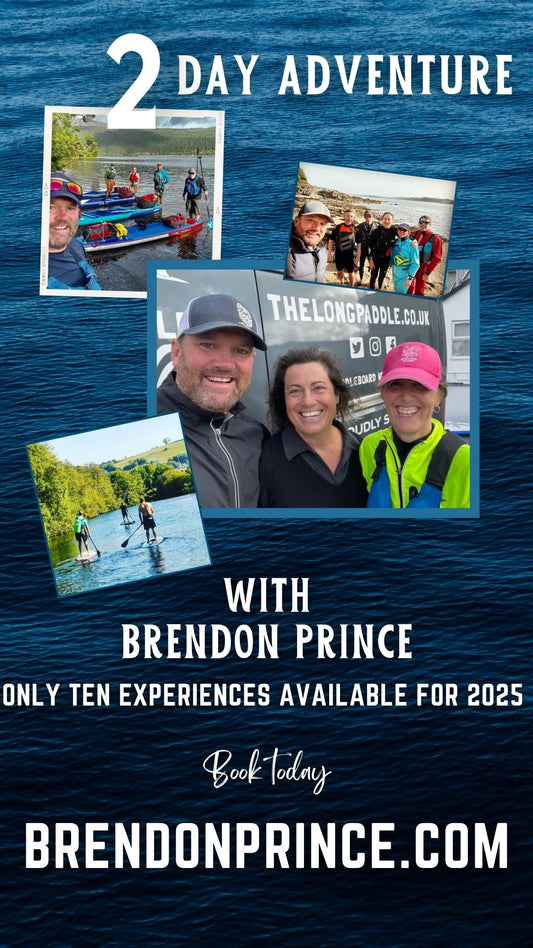
2 day Ultimate SUP Adventure
Regular price £900.00Regular priceUnit price per -
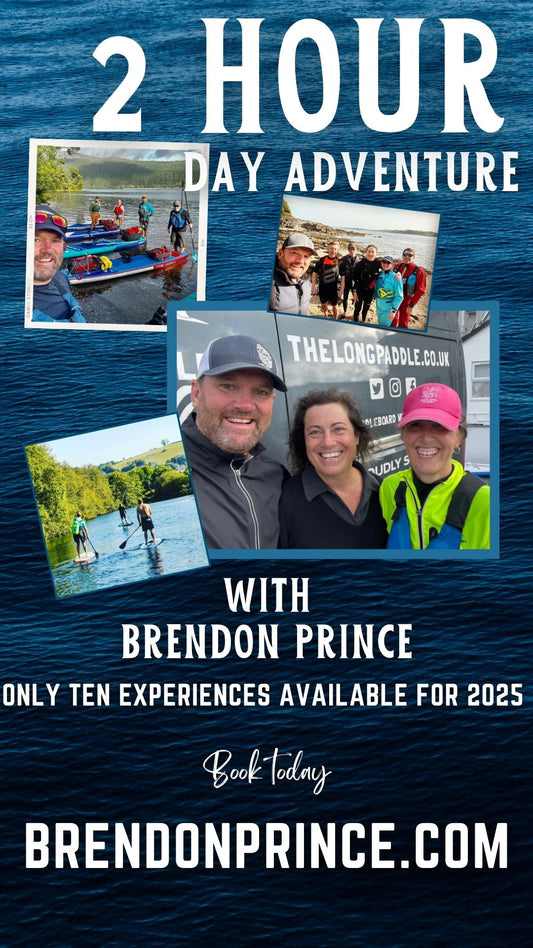
2hr SUP Paddle Experience
Regular price £150.00Regular priceUnit price per -
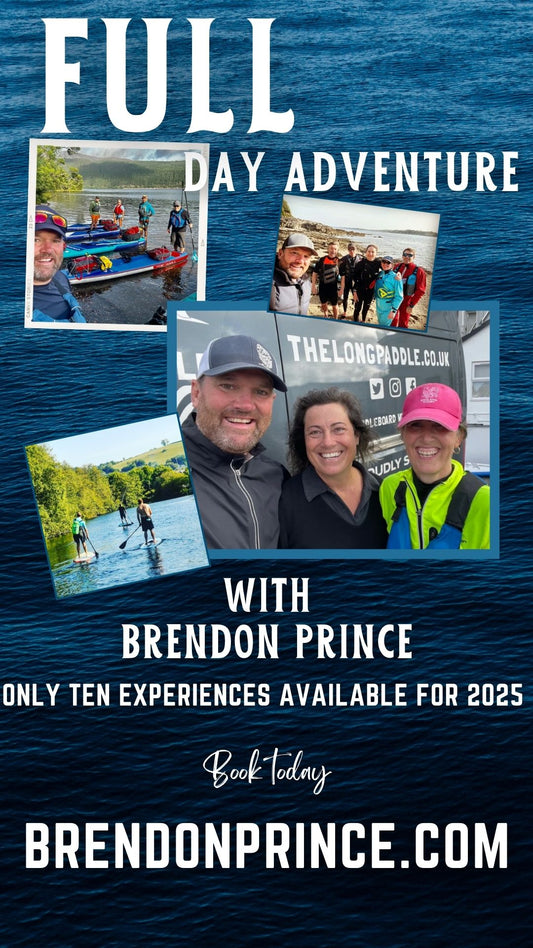
FULL Day SUP Adventure
Regular price £500.00Regular priceUnit price per -
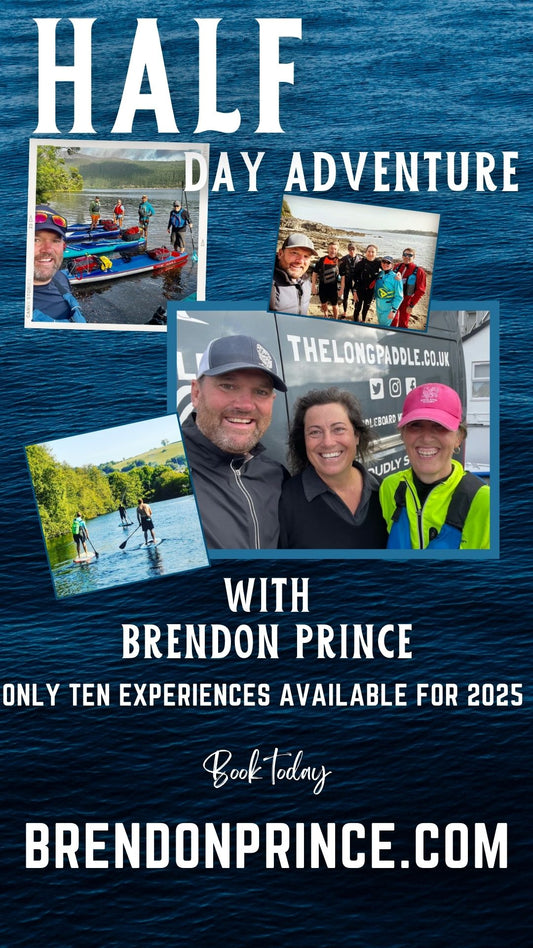
Half Day SUP Adventure
Regular price £300.00Regular priceUnit price per